What your handwriting still says about you
Published on 28 August 2026 · 3 min read
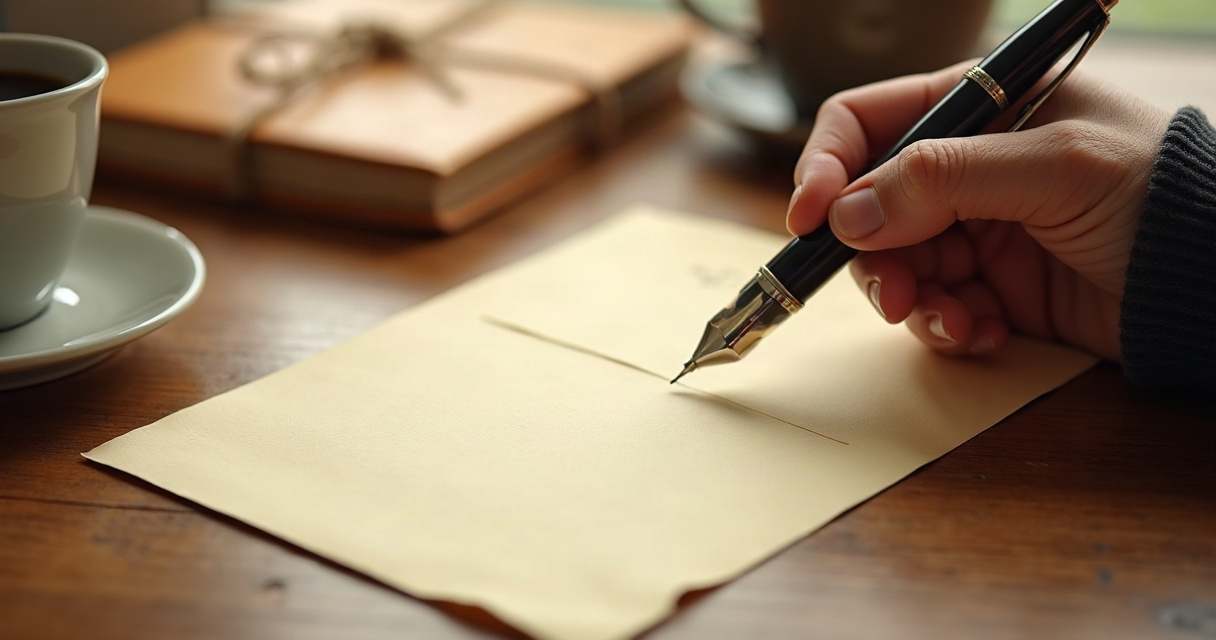
Some handwriting you recognise before you even read the signature. Your grandmother's, slanted and steady, with loops that spill over the lines. A friend's, all in capitals because he knows nobody can read him otherwise. We rarely notice how much a person's writing looks like them, until an old card falls out of a drawer and the whole person comes back at once.
A mark nobody else leaves
Writing by hand is slow, and that is exactly why it carries weight. You cannot delete three words without it showing, so you think before you put the pen down. A crossed-out word, a line drifting upwards at the end of the card because there was no room left: those small failures say something. A keyboard erases everything. We keep the cards we receive for twenty years and empty our inbox every six months.
The gesture changes what you write
Researchers who study learning noticed it long ago: forming letters by hand helps you remember, and taking notes with a pen pushes you to rephrase rather than copy. A pen forces you to sort. The same is true on a holiday card. Four lines, no more, and suddenly you have to choose what you actually want to say: the name of the village where you ate those mussels, the colour of the water at seven in the morning, the absurd thing your son said at breakfast. That sorting is precisely what makes a message feel alive.
What survives when the message is printed
We type almost everything now, including the note on the back of a card. That is not so terrible. What moves the person receiving it isn't the calligraphy, it's that someone took ten minutes, picked a photo, wrote a line meant for them alone and paid for the stamp. The gesture outlives the tool. A card printed and posted from 2.49 € all included lands in a real letterbox, ends up on a fridge door and stays there for months. No voice message does that. And if you truly miss the handwriting, write your note on a sheet of paper, photograph it and use it as the picture side: your hand will travel anyway.