The postman who built a palace: Ferdinand Cheval, his round and his postcards
Published on 10 October 2026 · 3 min read
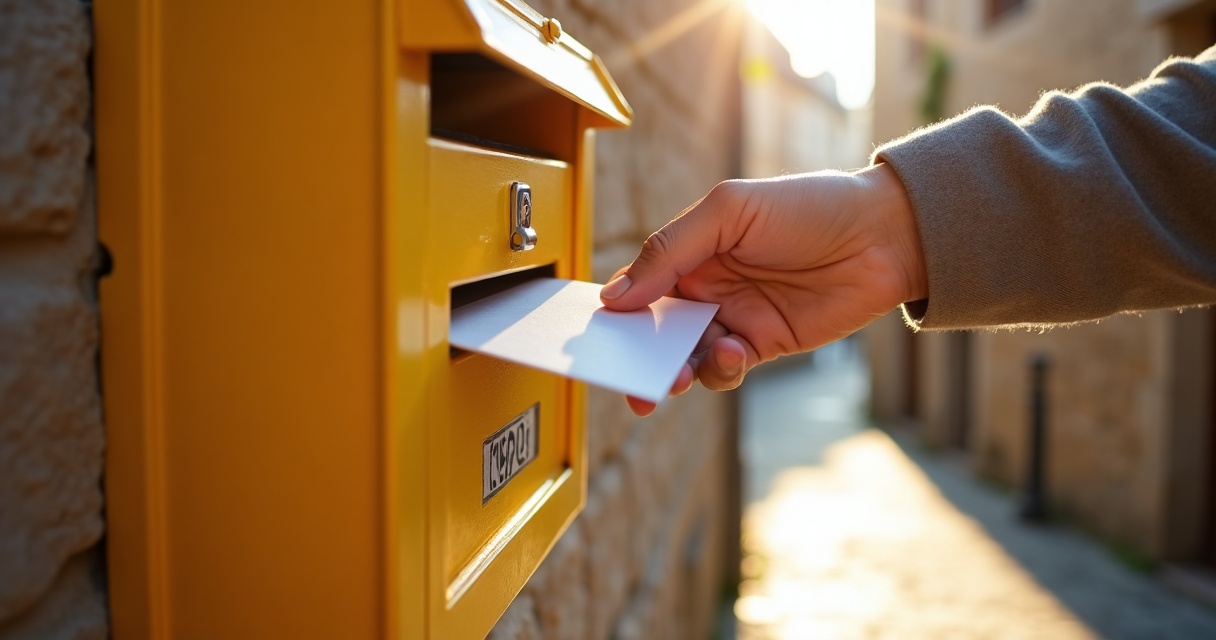
Hauterives, in the Drôme, south-east France, April 1879. Ferdinand Cheval is 43, a country postman who walks about thirty kilometres a day to deliver the mail. That day his foot catches on a stone so oddly shaped that he picks it up and takes it home. The next day he goes back for more. He won't stop for thirty-three years.
A dream fed by other people's post
Thirty kilometres a day, alone on country lanes, leaves plenty of time to dream. Cheval hardly ever left his region, but the world passed through his satchel: illustrated magazines, then the first picture postcards, with their distant temples, mosques, Swiss chalets and Eastern palaces. He looked at them before handing them over, and imagined one palace that would hold them all. He was neither a mason nor an architect. He decided to build it in his vegetable garden anyway.
A wheelbarrow, some stones and 10,000 days
The method was simple and exhausting. On his round he spotted stones and piled them by the roadside. In the evening he went back for them with his wheelbarrow, sometimes several kilometres away. Then he built, often at night, by the light of an oil lamp. The neighbours thought he was mad. He carried on. Giants, animals, grottoes, columns, a Hindu temple next to a Swiss chalet: the Palais idéal, the "Ideal Palace", slowly rose, 26 metres long. By the time he finished, in 1912, he had carved his own tally into the stone: "10,000 days, 93,000 hours, 33 years of toil".
The postman who ended up on a postcard
The story comes full circle rather nicely. Even before the work was done, the curious were turning up, and the palace became a postcard subject in its own right: there is Cheval, moustache and cap, posing in front of his creation. The man who had fed on pictures from elsewhere was now sending pictures out from his own garden. Later the Surrealists fell for it, and Picasso came to see. In 1969 the French culture minister André Malraux had the palace listed as a historic monument. Cheval died in 1924 and rests in the village cemetery, in a tomb he spent another eight years building himself.
What it says about a simple card
You can still visit the Palais idéal, and it's worth the detour. But the most touching part is where it all began: a few hand-sized pictures, passing from postman to letterbox, were enough to keep one man dreaming for thirty-three years. You never quite know what a card sets off in the person who receives it, or in the one who carries it. At UnCoucou we just make the start of the journey easy: choose your photo, write your message, enter an address in France or Monaco, and we print your card on thick premium paper and hand it to La Poste, from €2.49 per card, stamp included. At the other end, there's always a postman slipping it into the letterbox. Who knows what he'll make of it along the way.