The postman's job, then and now
Published on 1 August 2026 · 3 min read
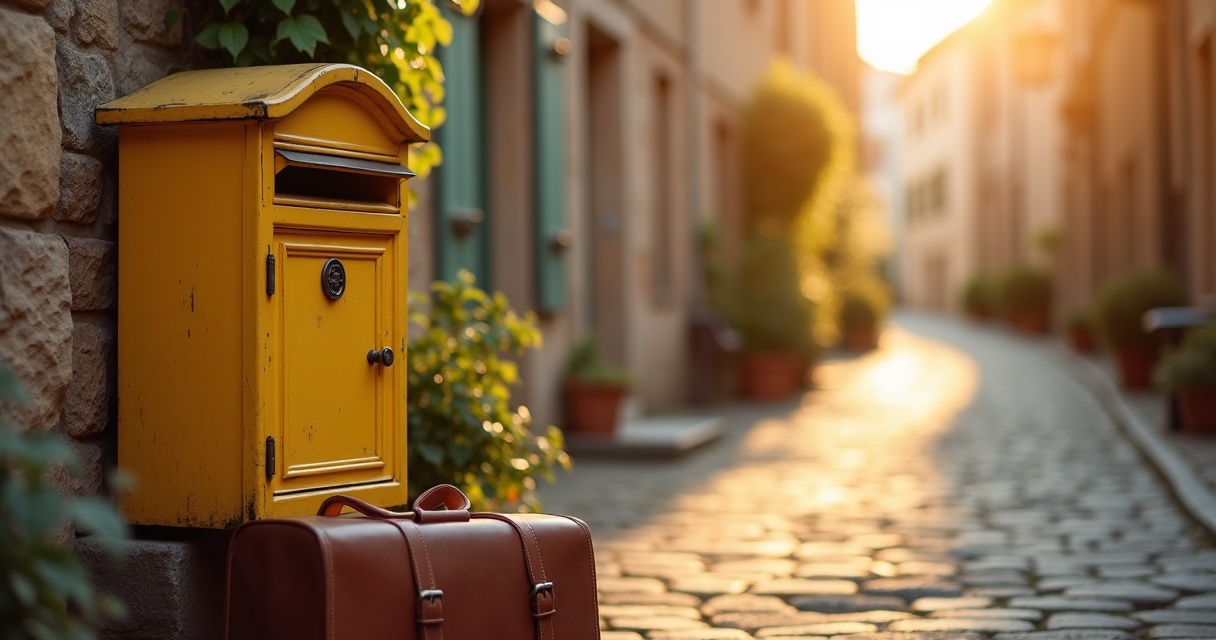
Forty years ago, the postman had a first name and a set time. In villages, people watched for him from the window, offered him a coffee in winter, and he left again with news from the next hamlet. Today he rides an electric bike or drives a small yellow van, he carries more parcels than letters, and his round is timed to the minute. The setting has changed, the gesture hasn't: someone takes your card and slips it into a letterbox, hundreds of kilometres from where you wrote it.
Kilometres on foot for two envelopes
The job really began in 1830. A new law had just required mail to reach everywhere, right down to the villages that had never received anything at all. Thousands of rural postmen took to the road on foot, some thirty kilometres a day, sometimes to deliver two or three letters. They quickly became far more than mail carriers: they read letters aloud to those who couldn't read, announced births and deaths, passed on what they had seen at the farm down the road. In much of the countryside, the postman was the only visit of the week.
What a postman carries today
Letter volumes have fallen by two thirds in about fifteen years, replaced by parcels. Sorting is done by machine and the round is optimised down to the metre. Meanwhile the job has widened in a curious way: some postmen check in on elderly people, read meters, deliver medicines. They are being asked to do again what they were already doing in 1850, keeping people connected, only with a smartphone in hand.
Why it matters when you send a card
When you order a card, you don't think about that chain. It's there all the same: your photo is printed, stamped, sorted, then handed to someone who knows the street, the building and the letterbox with the half-worn name on it. That's part of why a card lands in a way nothing else does. It travelled, and a hand carried it. With us it starts at 2.29 € all in, printing and stamp included. The rest of the journey is the postman's job.