Red, yellow, blue: a world tour of postboxes
Published on 13 August 2026 · 3 min read
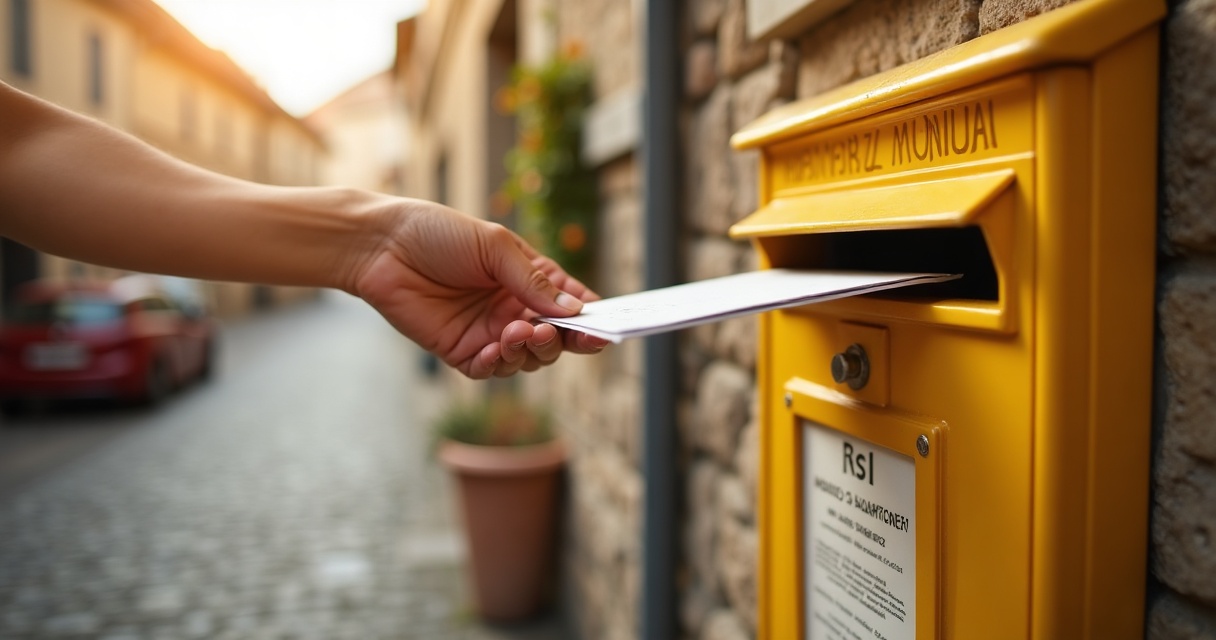
In France you can spot it from far away: the bright yellow La Poste box, bolted to a wall or standing on a street corner. That yellow dates back to the early 1960s, picked to stay visible even on grey days. Before that, French postboxes changed colour several times over the years. Yellow stuck for a simple reason: you can't miss it, even in a hurry, even in the rain.
Royal red, federal blue
London went the other way. The famous red pillar boxes, those cast-iron columns standing on pavements since Victorian times, still carry the monogram of the monarch who reigned when they were installed. Some read VR, for Victoria Regina: they have been swallowing letters for more than 150 years. In the United States, the mailbox is blue and massive, with a metal flap that creaks a little. In Japan it is a reddish orange, usually spotless, sometimes topped with a little roof against the snow. In Germany the yellow looks much like the French one, but the box is squarer, more discreet, fixed to the wall.
An object that tells you where you are
Take a closer look at postboxes when you travel: they say a lot. After independence, Ireland painted the red boxes inherited from the British green instead of replacing them — under the paint, the royal monogram is still there. In Portugal, the red boxes for regular mail stand next to the blue ones of correio azul, the fast service. And at the end of driveways in Norway or Canada, the little mailbox on its wooden post is almost part of the family landscape.
Next time you are away, photograph the local postbox before sliding your card in. It is a detail people forget, yet it places a photo better than any monument. And if you have nothing to post, send a real card from your phone with today's photo, from €2.29 all included — it will leave from a yellow box, of course.