Five digits to find a letterbox: a short history of the postcode
Published on 30 September 2026 · 3 min read
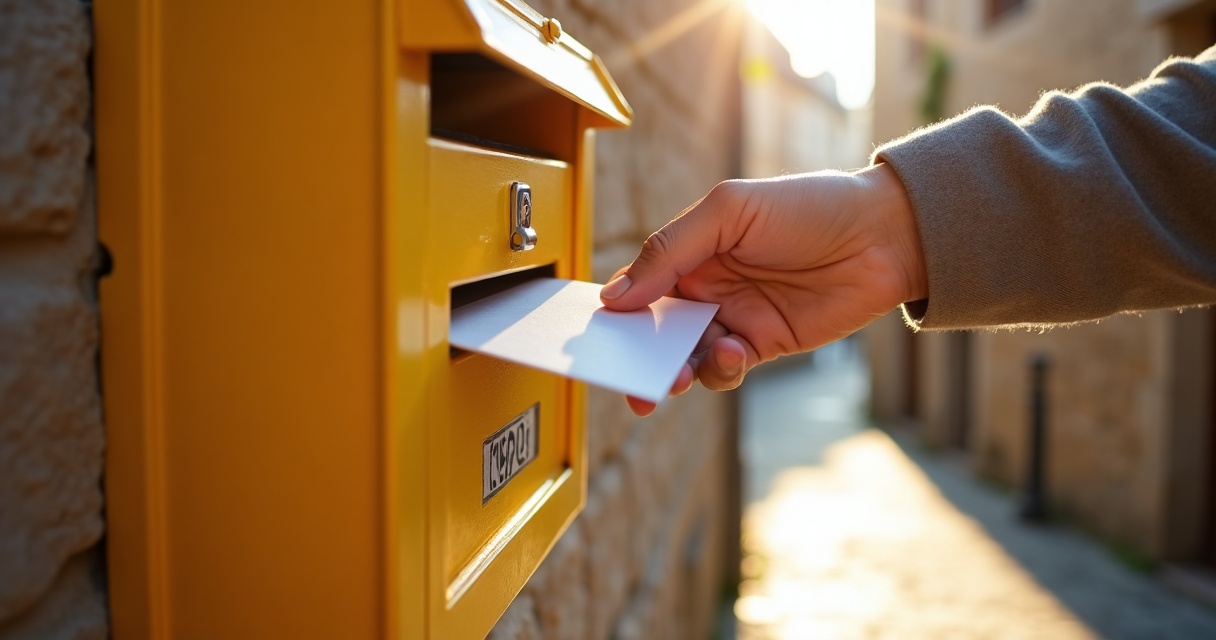
You know yours by heart, like your phone number. You probably also know your parents', your gran's, and the one from your first flat. The postcode feels as if it has always been there. Yet your grandparents spent a good part of their lives writing addresses without one: in France, the five-digit code is only about fifty years old, and the ZIP code and the British postcode aren't much older.
Before the digits, the sorters' memory
For a long time, sorting the post was a feat of memory. In sorting offices and on mail trains, clerks learned thousands of town and village names by heart, along with the railway line that led to each. A good sorter knew there were several Newports and never mixed them up. But after the war the volume of mail soared, and human memory could no longer keep up.
The idea of replacing geography with numbers came from Germany, which divided its territory into numbered zones in 1941. Britain tested its first postcodes in Norwich in 1959. The United States launched the ZIP code in 1963, with a cartoon postman, Mr. ZIP, to win Americans over. France took a first step in 1964, asking people to write the number of the département in front of the town name, and in 1972 introduced the five-digit code still in use today.
1972: "the password for your mail"
People still had to be persuaded to use it. The French post office ran a huge campaign with a slogan that stuck: "Le code postal, mot de passe de votre courrier" – the postcode, the password for your mail. Posters, adverts, code directories delivered to homes: it took years for the habit to settle in. The stakes were very practical. A machine can read a code. It made automatic sorting possible, and it's still the first thing the machines look for on your card.
What five French digits tell you
The first two give the département: 29 for Finistère at the tip of Brittany, 13 for the area around Marseille, 06 for Nice and the Riviera. The last three point to the office that delivers the mail. That leads to a few quirks. Many neighbouring villages share a code: there are roughly 6,000 codes for almost 35,000 communes. In Paris, Lyon and Marseille the final digits give the arrondissement: 75011, 69003, 13008. Corsica kept 20 for its post even though its two départements are numbered 2A and 2B. And 98000 isn't a département at all: it's Monaco, which shares the French system.
Every country has its own style. British postcodes mix letters and numbers, Portugal uses seven digits with a hyphen, and Ireland only adopted its code in 2015. A postcode is a bit like an address's accent.
Five digits and someone at the other end
You end up growing fond of these numbers. A 64 on an envelope and you're already in the Basque Country; a 35 and you can picture that holiday house in Brittany. At UnCoucou, it's about the only technical thing we ask of you: choose your photo, write your message, enter an address in France or Monaco, and we print your card on thick premium paper and hand it to La Poste, from €2.49 per card, stamp included. Just check the five digits before you confirm: they're what guides your card to the right letterbox.