They've just left for university: the postcard waiting in their brand-new letterbox
Published on 14 September 2026 · 3 min read
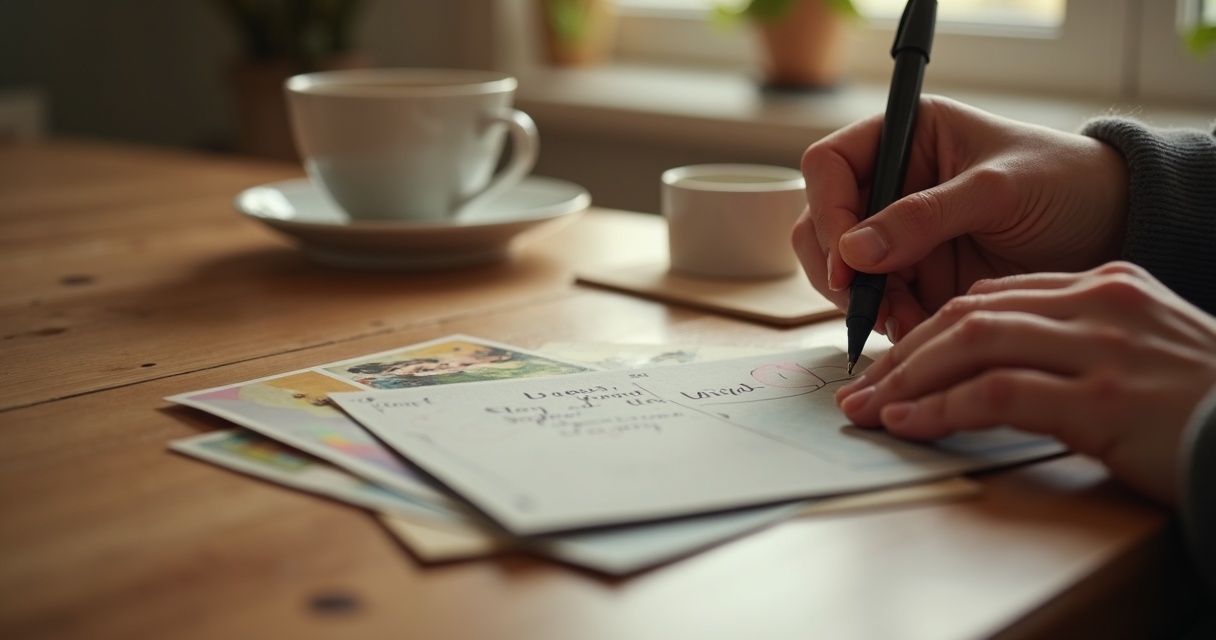
The room is sorted, the car was emptied one Sunday afternoon, and the house has been a little too quiet ever since. They're eighteen, living in nine square metres in a city you barely know, with a timetable that starts at nine. You talk, of course. There's the family group chat, the photos of the canteen, the slightly short "I'm fine" at the end of the day. But down in the lobby of their halls there's also a letterbox with their name on it, brand new, that has never received a single thing. That's where a postcard belongs in mid-September, with no occasion at all: the first thing from home to arrive at theirs.
A photo of home, not of the sea
The usual reflex is to choose a pretty picture, a landscape, something that "looks like a postcard". For a student who has just left, you want the opposite. The right photo is the cat curled up on their empty bed, the Sunday roast with one chair fewer, the little brother who has already annexed their bedroom, the garden in September rain. It says "everything's here, nothing has moved, you can go and not worry". If you want to make them smile, photograph the most ordinary thing you can find: the box of cereal only they ever ate, still in the cupboard. A detail of home beats a sunset every time. They get a new sunset every evening now. They don't get home.
What to write, and what to save for the phone
The temptation is to put everything in: the advice, the reminders, "eat some vegetables", "have you sorted your student loan". The phone already handles all that, a bit too well. The card is for something else. It's for saying you're proud, for one small piece of everyday news, and for letting them know the door is open. "We're proud of you, you know. The cat still looks for you in the evening. Your room is still your room, even with your brother's boxes in it." Three sentences, no instructions. And no "WE MISS YOU" in capital letters either: they know, and it could weigh on them on a Tuesday night in week one. A card they're glad to find, not a card that makes them sad. Sign it with the name they call you, not your first name: that's the word they'll look for at the bottom.
Why paper, when you already message every day
Because a message is buried under twenty others by lunchtime, and a card isn't. It'll sit on the desk next to the laptop, get tucked into the frame of the mirror, get pinned to the wall beside the photos of the new friends. The people on their corridor will see it, and that's not nothing: it says, without a word, that they come from somewhere and someone there is thinking of them. There's also that small moment, coming back from a lecture, when you glance out of habit at the empty letterbox, and one day it isn't empty any more. That's worth the price of a card many times over. And nothing stops you turning it into a quiet ritual: one in early October, one before exams, one for no reason. They won't tell you on the phone, but they'll keep every one.
Tonight, once the house has gone properly quiet, pick the most ordinary photo from the weekend, write your three sentences, and leave the rest to us: the card is printed in premium quality and posted with our next dispatch (there's at least one a week), from €2.49 all in. It'll land a few days later in a letterbox that had never received anything. That, they'll remember.